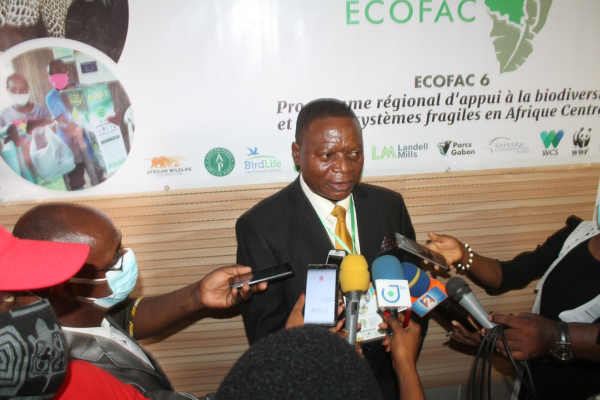
The programme aimed to promote a green economy characterised by locally established economic development in support of climate change mitigation and adaptation. Its focus was more effective protection of the diverse and fragile ecosystems of Central Africa, taking into account sustainable management of ecosystem services.
The regional support implemented by Landell Mills focused on knowledge exchange at the local, national, and regional level. This was achieved through strengthening stakeholders’ knowledge-sharing systems, as well as capitalising on and replicating innovative approaches.
ECOFAC 6 supported the following areas:
- monitoring activities under the regional programme component;
- creating synergies between programme components so that stakeholders benefitted from crosscutting activities at regional level; and
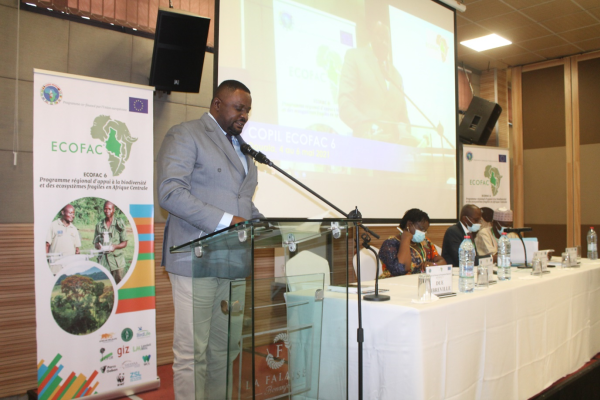
- keeping the regional steering committee and other high-level meetings informed on lessons learnt.
Landell Mills supported knowledge-sharing on issues encountered within the protected areas. These included biodiversity losses from anthropogenic activities such as elephant poaching, increasing pressure on ecosystems from livelihood activities, poor forestry practices, logging, and mining.
Support was provided to political appeals for the conservation of biodiversity at the regional level. The Regional Steering Committee and the National Steering Committees drove evidence-based political commitments on the major issues and challenges facing the sector. These included:
- poaching,
- implementation of cross-border-cooperation agreements,
- the environmental impact of the extractives industry,
- livelihood activities of the local population,
- issues around the rights of indigenous groups, and
- creation of new transboundary protected areas.
Landell Mills provided a range of services under the programme, including strategic communications, event management, production of communication materials, media relations, copywriting, editing, and graphic design.