Investment feasibility
and design
We support clients at early stages of the project cycle covering programming, identification, and in particular, formulation (feasibility and design). To date we have supported the design of over EUR 1 billion in investments for both public and private clients. Our UK subsidiary is consistently amongst the top three suppliers of services to the Asian Development Bank, supporting partner countries in due diligence and feasibility design of sovereign investments. As well as technical feasibility, our expertise covers environmental and social safeguard due diligence, economic and financial analysis, and procurement and financial management assessments. We try to ensure that projects are investment ready and assist clients and beneficiary governments in identifying sources of finance from public co-financiers (including climate finance), or by leveraging private sector investment (e.g. through public-private partnerships and concessional financing [blended finance]).
Project examples
Support to the formulation of actions in Africa, Caribbean and Pacific (ACP) regions under the Intra ACP Climate Services and Related Applications Programme
The Intra-ACP Climate Services and Related Applications Programme adopted in January 2018 (EUR 85 million over 6 years) aims to support the climate services value chain with technical assistance, financial assistance, infrastructure and capacity building to improve access and use of climate information, and to enable and encourage the generation and use of climate services and applications for decision making processes at all levels. Improving the quantity and quality of climate services offered by regional climate centres and hydro-meteorological organisations in ACP countries and increasing knowledge and information services will lead to their certification by the UN World Meteorological Organisation.
The objective of Landell Mills' contract was to formulate actions under the programme, including a description, logical framework, budget and other annexes for each ACP regional organisation benefitting from the Intra-ACP Climate Services programme.

Climate Adaptation through Irrigation Modernization Sector Project
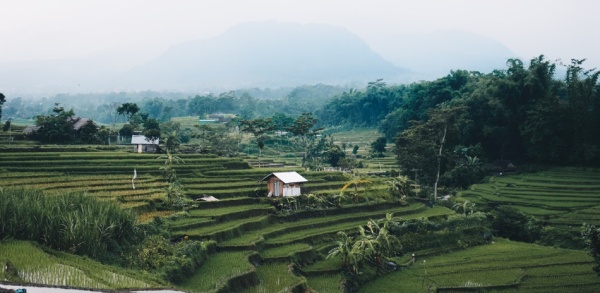
Viet Nam’s agricultural sector is vulnerable to climate change while ranking sixth worldwide for climate risk exposure. The Government has recognised there is a need to strengthen climate resilience in the agricultural sector through modernising irrigation and drainage infrastructures. The major output of the contract is an irrigation project design which responds to government's needs and fulfils ADB requirements.
Preparation of the Climate-friendly Agribusiness Value Chains Sector Project
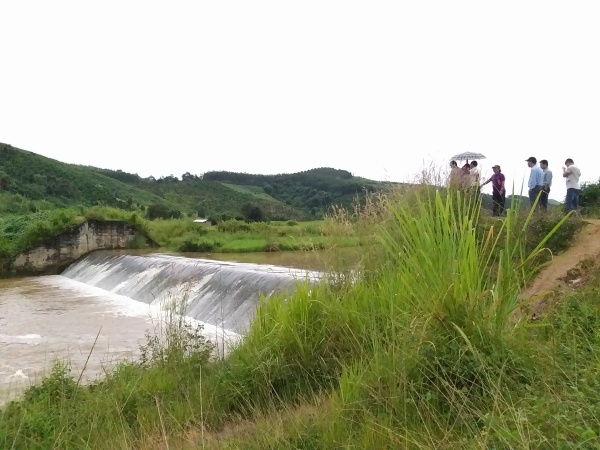
Landell Mills was contracted to undertake feasibility and due diligence and prepare project documents for approval of loan/grant funding and co-financing by Asian Development Bank and sovereign governments for three projects in Cambodia, Lao PDR and Myanmar (valued at over US$250m) designed to help with the switch to greener agricultural value chains with the aim of improving resource efficiency and environmental sustainability for agricultural producers and agribusinesses, while also improving rural incomes. While all three projects were slightly different, responding to the local contexts, they each hinged around three outputs as follows:
- Output 1: critical agribusiness value chain infrastructure improved and made climate resilient
- Output 2: climate-smart agriculture and agribusiness promoted
- Output 3: enabling environment for climate-friendly agribusiness enhanced
Technical Assistance to the EU Delegation for Cooperation in Sudan
Landell Mills is supporting the EU Delegation in Sudan in:
- Reviewing sector policy needs, potentialities and constraints of areas of interest to the EU;
- Identification of priorities and options for future EU programming;
- Support to the programming, identification and formulation of new programmes (preparation of support documents, drafts and other documents upon request of the contracting authority) in the focal areas of EU cooperation;
- Prepare ad hoc sectoral reports in areas of interest to the EU;
- Assisting with and organising the participation in conferences, seminars, workshops and presentations upon request of the EUD;
- Identifying, organising and implementing communication and visibility actions to promote the activities of the EU technical cooperation facility.
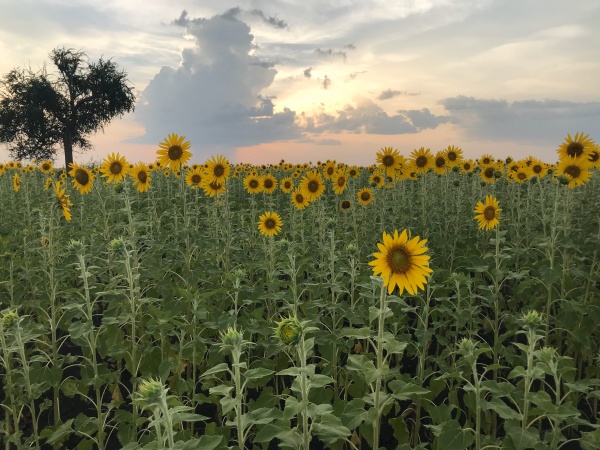
Preparation of the Vegetable Production and Irrigated Agriculture Project
Mongolia has made strides over the past decade to become self-sufficient in and mechanised cereal and potato production, but vegetable farming has been neglected and is not yet very productive. This perpetuates low income for vegetable farmers and high reliance on imported products, which in turn threatens national food security. As such, Landell Mills was contracted to support the Government of Mongolia in the feasibility, due diligence and preparation of the Vegetable Production and Irrigated Agriculture Project. The project will:
- Rehabilitate irrigation systems and integrate farming groups into inclusive agriculture value chains in up to six provinces;
- Set up cold storage, packaging, and wholesale trading capacity in Ulaanbaatar;
- Strengthen institutional capacity and coordination to enable sustainable and inclusive use of project supported irrigation systems and value chain facilities, including strengthening of farmer capacity on proper use of chemicals and fertilizers (e.g. integrated pest management and good agriculture practice).
Consultancy for Kabul Managed Aquifer Recharge Project Preparation
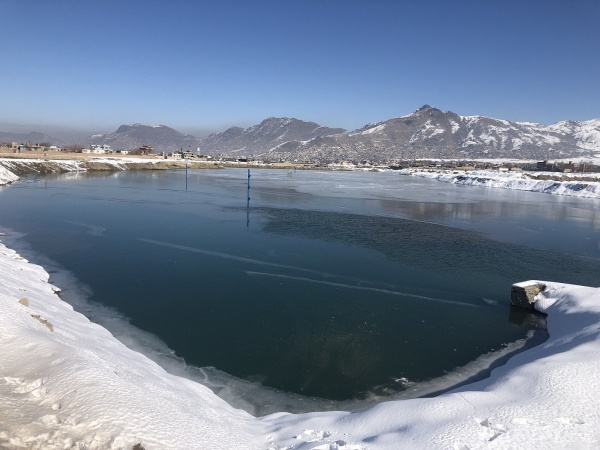
Kabul is one of the most water-stressed cities in the world. With little access to surface water, the city relies on groundwater, levels of which are declining. In order to address this problem, Landell Mills was contracted to pilot Managed Aquifer Recharge (MAR) techniques in a number of pilot sites in and around Kabul, and based on the results, design a follow-on scaled-up investment project.
A spreading basin and injection wells were constructed, both of which proved feasible to scale-up, and a city-wide monitoring network (piezometers linked to telemetry) installed. The spreading basin in particular was highly appreciated by the local community who observed improved water levels in their domestic wells. A groundwater model was prepared to identify additional sites, and a scaled-up investment project prepared, including project documentation required for ADB board and government approval.