Monitoring, evaluation
and learning

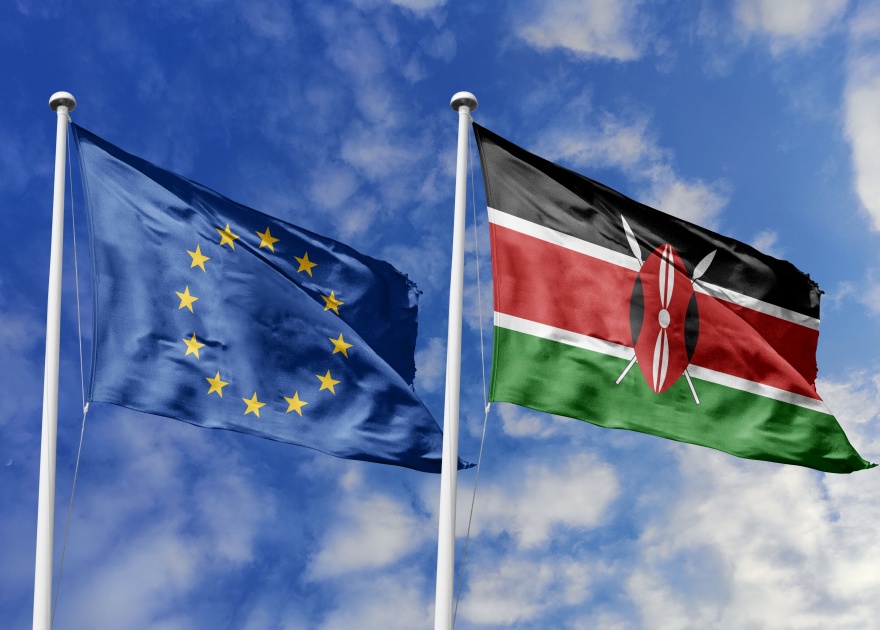
Our Monitoring, Evaluation and Learning division is focussed on two key service areas: 1) independent, third-party monitoring; and 2) evaluation. Our third-party monitoring services have expanded over recent years, in response to growing demands for donor accountability and learning, and particularly in fragile and remote areas where our clients lack physical presence. In the past five years we have led long-term TPM contracts for FCDO, ADB and the EU in Syria, Afghanistan, Sudan and South Sudan. These contracts complement our long track record in delivering results-oriented monitoring (ROM) for the EU. Since 2015 we have led and partnered on global ROM contracts for the EU and we currently lead the ROM contract to support the EU’s work in the Middle East and North Africa.
Our evaluation work extends from simple programme evaluations to complex, strategic evaluations at country and thematic level. We work across all geographies and sectors and hold long-term agreements / framework contracts for evaluation services with FCDO, EU, the Red Cross, WFP and other UN agencies, including UNICEF.
Project Examples
Review (Results-Oriented Monitoring – ROM) within the framework of EU's external assistance: Lot 3 – review of implementation of projects and programmes financed by the EU for Asia-Pacific
Between 2015 and 2019, Landell Mills was appointed as the European Commission’s main contractor to deliver independent monitoring services of a sample of the EC’s development cooperation interventions in the Asia Pacific region. This portfolio covered 32 different countries, including those experiencing political volatility and/or instability at the time (such as Afghanistan, Bangladesh, Myanmar, Pakistan and Yemen). The projects and programmes that were monitored by Landell Mills covered all DAC sectors, including education and culture, health, social protection, rural development, nutrition and food security, migration, water and sanitation, environment and natural resources, climate change, democracy and rule of law, gender equality, human rights, governance, private sector development, trade and economic growth.
Prosperity Fund: Global Skills Programme Gender and Inclusion Study
In 2015, the UK government`s Strategic Defence and Security review announced a cross-government prosperity Fund (PF) to run over five years. The PF was established to promote the economic reform and development needed for sustainable and inclusive growth and poverty reduction in partner countries. The purpose of the Global Skills Programme Gender Inclusion Study was to support the PF Skills Programme Team in nine countries, to strengthen its gender and inclusion mainstreaming strategy both across the Programme and within the countries’ contexts in Higher Education (HE) and Technical and Vocational Education and Training (TVET).
The technical team conducted a multi-country baseline study of gender and inclusion in HE and TVET and produced a scoping report with recommendations for gender and inclusion strategy. The delivery of the study supported the programme’s intended impact and outcome in improving access to tertiary education for women and marginalised groups.

Syria Independent Monitoring (SIM) Phase II
Since 2020, Landell Mills has been supporting FCDO to monitor its humanitarian programme in Syria by working with partners and field-based staff to collect ‘real time’ data to track progress of individual projects, identify and mitigate risks and learn lessons for future design. Through these services, we are able to support FCDO in being accountable for its support to the Syrian population through vital agriculture and livelihoods, education, food security and health, shelter, protection and WASH projects.
Review (Results-Oriented Monitoring – ROM) System for External Aid Interventions Lot 1 – ROM for Asia and Pacific, Latin America, Caribbean, and Centrally Managed Thematic Interventions
Between 2015 and 2019, Landell Mills deployed over 100 experts to countries throughout the Asia Pacific region to conduct more than 500 independent reviews and progress tracking of the EC’s development cooperation in the region. This results-oriented monitoring work, which was coordinated from our office in Brussels, covered a sample of interventions across all key sectors in 32 different countries, including those experiencing political volatility and/or instability at the time (such as Afghanistan, Bangladesh, Myanmar, Pakistan and Yemen).
Evaluation Support Service
In our delivery of the Evaluation Support Service for DG INTPA, which we have led since 2017, we are working to generate and share learning both within the European Commission and to the wider evaluation community. In this contract, we have led campaigns on Evaluation in Hard-to-Reach Areas and Evaluating during the COVID-19 Pandemic through a series of webinars, podcasts, blogs and other creative communication products. We have also promoted the importance of disseminating evaluation findings more effectively through interactive guidance and resources. Staffed by a core team of three experts in Brussels, and a pool of short-term evaluation specialists, the Evaluation Support Service provides on-demand technical support to EU headquarters and Delegations worldwide. Since its launch in 2018, it has responded to 1568 requests for technical support.
Evaluation of the European Union’s cooperation with the Republic of Moldova (2014-2020)
This strategic country-level evaluation assessed the performance, coherence, and coordination of EU support in Moldova over the period 2014-2020 with the objective of supporting accountability and learning for future cooperation, policy and programming. It covered national and regional level cooperation in Moldova, including both policy dialogue and financial assistance. Through 10 evaluation questions, it addressed seven sectors of cooperation (agriculture and rural development; governance; energy, infrastructure, and climate change; education; business environment; civil society; and the Transnistria region) and it also tackled cross-cutting and strategic issues pertaining to all sectors. The evaluation provided targeted recommendations to the various sectors of cooperation, and to the overall policy and programming of EU cooperation in Moldova.
Evaluation of EU Support for Security Sector Reform in Enlargement and Neighbourhood Countries (2010-2016)
The purpose of this evaluation was to provide an assessment and evidence on the scope and performance of the implemented and on-going EU support for Security Sector Reform (SSR) in countries covered by the IPA and ENPI/ENI instruments. It aimed to provide recommendations for the improvement of the programming and implementation of EU support to Security Sector Reform in line with the principles laid down in the communication JOIN (2016) 31 final "Elements for an EU-wide strategic framework to support security sector reform" and the Global Strategy for the European Union's Foreign and Security Policy.
Strategic Mid-Term Evaluation of the Facility for Refugees in Turkey (2016-2019/20)
This evaluation provided the European Commission and EU Member States with an independent assessment of the Union’s EUR 6 billion package of support to the 3.5 million+ refugees hosted by Turkey and strategic and technical recommendations for the future of EU-Turkey cooperation on refugee hosting and migration. The portfolio evaluated included flagship humanitarian and development actions implemented in close partnership with the Government of Turkey and others, such as the EUR 1bn+ Emergency Social Safety Net, the Conditional Cash Transfer for Education, and EUR 300m direct grants with the Ministries of Health and Education. The evaluation was divided into sectoral (education, health, socio-economic support and protection) and strategic components, with corresponding final reports.
Performance Evaluation of the New Alliance Information and Communication Technologies Agriculture Extension Challenge Fund
This evaluation used a theory-based approach to assess the performance of the NA-ICT Challenge Fund which aimed, at impact level, to improve agricultural productivity in selected food crops by smallholder farmers in six countries: Ethiopia, Ghana, Malawi, Mozambique, Senegal and Tanzania. The programme’s envisaged outcome was that new knowledge and practices be applied by one million smallholder male and female farmers with access to financially sustainable ICT-enabled extension in the six countries. The ICT-enabled extension channels included SMS, voice messaging, apps, participatory radio, and mediated video. The evaluation applied a contribution analysis and case studies across the six countries to develop a series of lessons learned.