Agriculture, fisheries,
and food systems
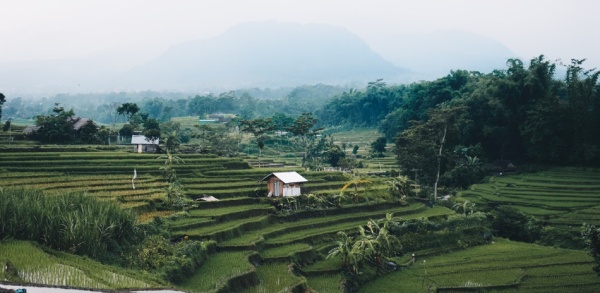
Agricultural development has been at the forefront of our work since our establishment almost 50 years ago. Our track record covers: agricultural production and farming systems in all types of agro-ecological zones, with both rainfed and irrigated agriculture; rural infrastructure; agribusiness, value chains and market systems; food systems transformation; food security and nutrition; fisheries, mariculture and aquaculture; agricultural policy and institutional reform; and agricultural trade and market access. Cross-cutting interventions include climate adaptation, green and inclusive supply chains, digital agriculture and gender quality. Examples of our work include an Agricultural Technology Transfer project, the Greater Mekong Subregion Sustainable Agriculture and Food Security Programme, strategic agricultural policy and investment support to the Central Asia Regional Economic Cooperation (CAREC) Program, and the EU Food Fortification Advisory Service. Our team has worked with private sector agribusinesses, e.g. Olam and ECOM, to integrate smallholders into their supply chains in Indonesia, Papua New Guinea, and Timor Leste.
Project Examples
Working with China to Accelerate Agricultural Technology Transfer to Low-Income Countries (AgriTT)
This was one of the UK government’s first projects to effectively triangulate UK Aid with Chinese South-South cooperation. AgriTT improved agricultural productivity and food security in developing countries by bringing together Chinese agricultural development practice and technology expertise, with UK research and project management experience, and the local knowledge of African and Asian partners.
AgriTT took an integrated approach, looking at both production technologies and other aspects of the value chain, including production, processing, distribution and marketing.
Landell Mills won the International Collaborative Project award at the 2017 British Expertise International Awards for its management of the programme.
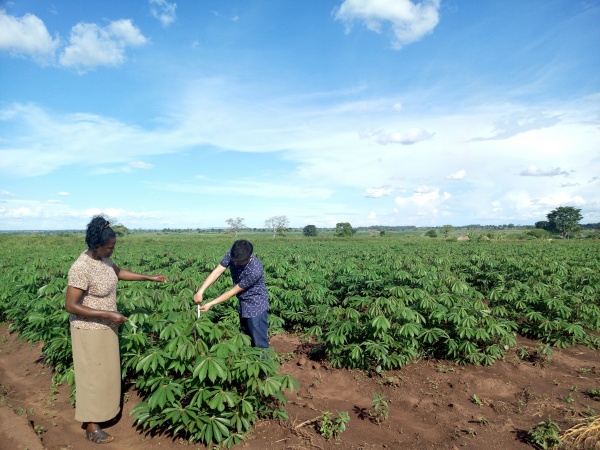
Technical Assistance to the Rural Smallholders Component of the Sudan Food Security Programme (SFSP)
This EU-funded project aimed to improve the productivity and income of rural smallholders, and as a result their livelihoods, both through practical demonstration, in terms of subsidised inputs and implementation, and through the use of various training and extension methodologies. In Gedaref, Kassala and Blue Nile States, the focus was on improving sorghum productivity by smallholder farmers during the rain-fed agricultural season. In Red Sea State, the focus was on enhancing productivity from smallholder horticulture and near-shore artisanal fishing. The project adopted a market development approach, working with extension services to build the capacity and technologies of producer associations, smallholder farmers and fishermen and linking them with financial service providers and upstream and downstream agribusinesses.
Mainstreaming Climate Change Risk Management in Development – Consultants for Sustainable Rural Ecology for Green Growth
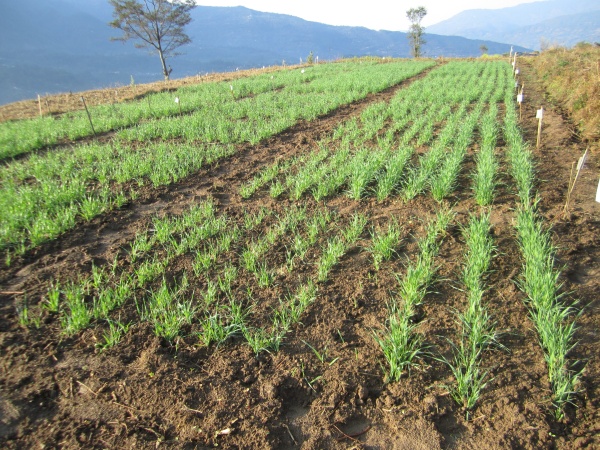
The Nepal Biochar Project was a 2-year pilot project between the Government of Nepal and the Asian Development Bank, for which Landell Mills was awarded the Development Project of the Year Award 2017 by British Expertise. The project's main focus was to assess the viability for scale-up of the utilisation of biochar, a green growth technology, for addressing declining soil fertility, crop productivity and resulting farm income, while reducing the import of chemical fertilisers.
Landell Mills collected data from government and farmer field trials in over 100 rural communities, testing the most effective ways to produce and utilise biochar. This was the most extensive biochar field trial done worldwide to date. Significant yield increases were observed for all crops tested, ranging from 20% for tomato to 300% for pumpkin.
Following the success of the project the government incorporated biochar technologies into national programmes, which will impact thousands of farmers.
Olam International Limited: Inclusive, Sustainable, and Connected Coffee Value Chain
Landell Mills provided technical assistance to support a loan agreement between ADB’s private sector operations and Olam, a private agribusiness, to expand its operations in the Timor-Leste coffee value chain, by working with farmers to improve coffee production and quality.
Over three years, the project has designed and delivered a series of good agricultural practice and climate-smart agriculture training to over 4,200 coffee farmers. Training has covered modules including pruning, nursery management, plantation management, and harvest and post-harvest management. Using a Farmer Field School approach, training has taken place across 120 demonstration plots.
Beyond training, the project has conducted a pilot traceability and speciality project, piloted the use of a digital farmer information management system through android technology, supported farmers to obtain Organic and Fairtrade certification, and set-up a new agricultural cooperative.
Technical Assistance for Strengthening National Capacities in Food Fortification
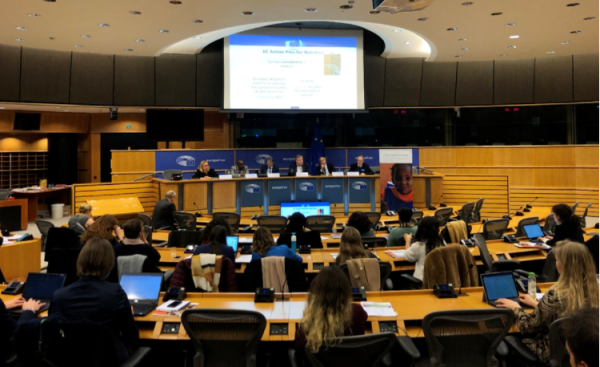
The Food Fortification Advisory Service (2FAS) is a 7-year project which is funded by the EU and is implemented through a Landell Mills and the Global Alliance for Improved Nutrition (GAIN) partnership. 2FAS provides technical assistance to the EU and EU Delegations with the purpose of: supporting partner countries to implement new or strengthen existing national fortification programmes; increasing action and political commitments to food fortification at both global and national levels; and sharing knowledge and lessons learned on the role of food fortification in reducing micronutrient deficiencies.
2FAS is providing ongoing support to ten different EU-funded food fortification projects across Chad, Democratic Republic of the Congo, Ethiopia, The Gambia, Kenya, Madagascar, Niger and Sudan, as well as supporting a programme in Kazakhstan, at the request of the EU Delegation. In addition to this, the 2FAS research portfolio implemented by Agrinatura comprises of three different research lots which are currently conducting research centred around different food fortification themes.